Episode Transcript
[00:00:00] Speaker A: What are my skill set? I would tell you 95% of the people we work with are technically sound. They know what they're doing. When it comes to the hard skills, it is the collaboration.
It's not needing to be right all the time. It's not needing to be loved by everyone.
You know, it's all these other kinds of things. You find a high potential person that people go, wow, you're going to end up in a C suite. And you don't every single time. It's because you relied too heavily on your technical capabilities and you did not build relationships up across the organization. So you have to spend time and you can do it remote. You have to spend time cultivating relationships, connecting with people and expanding internally as well as externally to your company.
[00:00:54] Speaker B: Most people think their career is going to move forward because they're good at what they do. They focus on getting better technically, learning more, becoming the expert. But here's where that's wrong. That's actually not what really moves people forward. And in fact, it's often the thing that holds them back.
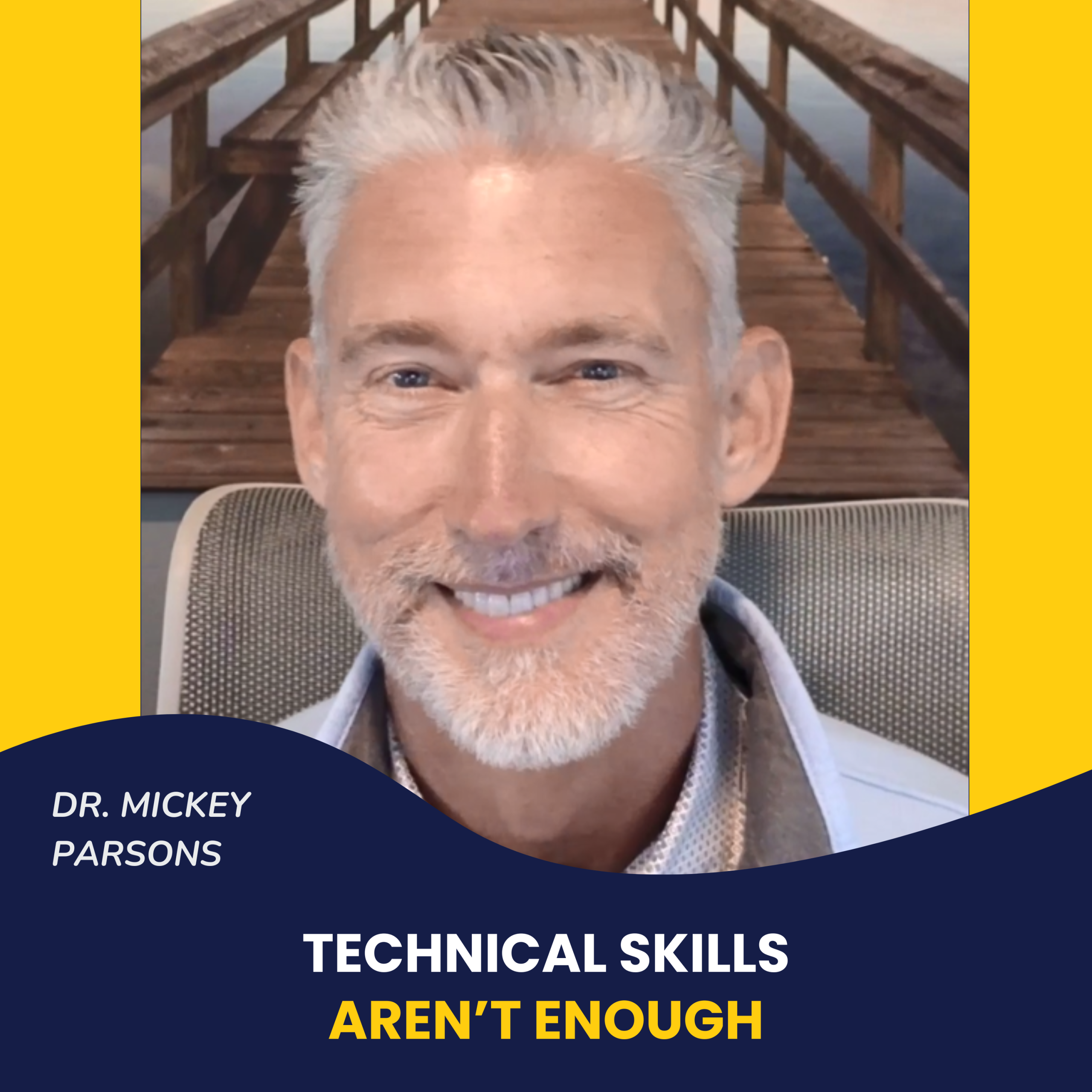
In this episode of the Wavemakers, we're joined by Dr. Mickey Parsons, the founder of the Workplace Coach. He's a master certified coach, which places him in the top 2% of coaches globally.
He has for the last 20 years coached over 3,000 executives. And this is what he consistently sees. Most people are technically sound, but it's the non technical skills, how they communicate, how they build trust, how they lead, that determine whether they actually move forward.
And this isn't just about executives. This applies to you. Whether you're a contractor running your own business or an individual contributor trying to grow, or you're already leading a team.
Because leadership doesn't start when you get the title. It shows up long before that. And if you miss it, that's where your career can stall.
We are so excited to have Mickey Parsons with the Workplace Coach here with us today.
Mickey is actually someone that I've known probably, Gosh, Mickey, what are we, 20ish years?
[00:02:20] Speaker A: Let's just go with 20, okay, 20 years.
[00:02:23] Speaker B: He owns a business that does all kinds of coaching and specializes in leadership coaching. Back when I first met Nikki, he was starting his business, I was starting corner office. And it's just been a pleasure brainstorming with him and getting advice from him and all kinds of things. And so we asked him to come on today because leadership is not just about executives. Leadership hits our entire audience. It's contractors, it's leads, it's individual contributors, new managers and executives. So today we're going to break down kind of all those sections and Miki, we're so glad that you're here with us.
[00:02:59] Speaker A: Thank you, Carla. I'm thrilled to be here.
Thanks, Nick.
[00:03:02] Speaker C: Thanks. Thanks for being here. Well, and I was just going to say, as Carla mentioned, many, many years of leadership coaching. We won't say the actual number, but you know what, what keeps you so passionate?
[00:03:15] Speaker A: She already did.
[00:03:17] Speaker C: How do you keep that passion going after, you know, so many years in, in the industry?
You know, what keeps you passionate about helping others and coaching others?
[00:03:24] Speaker A: Yeah, you know, it's funny, I started coaching or I actually managing a team when I was about 22 years old. So it's been a minute and a half and you know, they were so much older than I was, 31 to mid-60s maybe, something like that. And it was literally what we would call trial by fire. Right. And so I, probably better than I know today, I knew how to kind of keep my mouth closed back then, watch human behavior, things like that. And so, you know, I just, I loved it. And I had always been kind of a psychology guy, so, you know, I did the EAP employee assistant stuff, but I love management, I love business development and, and eventually when I kind of discovered this thing called coaching, I was like, hooray. This is, this is kind of how I bring it all together.
And it's one of those things, you know, I just, I've never had the same day twice in over 25 years. I get to work with some of the most amazing people on the planet. And I also think that it's, it's, you know, it keeps me wanting to learn and grow and be at my best. And I just think it's, it's so much fun. Something that hit me very early on is I would work with someone, you know, maybe a high potential person. Right. Or maybe an individual contributor over time, you know, they've moved up the ladder and up the ladder and up the ladder. And I've literally had folks get to that point that I've been able to impact their lives. And now 30, 40,000 people reporting up to them is so exciting and bit of a huge responsibility as well. Right. So I think it's just that nine just never having the same day twice and being able to connect with high quality caliber of people that I get to hang out with, like YouTube.
[00:05:09] Speaker C: Fantastic. Very relatable with recruit in the recruiting field as well. When you put somebody in maybe at a, an analyst role and a couple years later they're now senior Manager or director, leading their own team and that growth, and you were part of that, that's just, it's, it's feels good. So I understand where you're coming from.
[00:05:27] Speaker B: Literally, picture pictures of people were going through my mind as Mickey was saying, you know, absolute.
[00:05:33] Speaker A: Yeah, it's amazing. Right.
[00:05:34] Speaker C: Well, and I was going to. You mentioned, obviously, independent contractors, you know, owning their business owners. I mean, it's their company and they're representing, it's their organization. And a lot of times when we work with contractors, you know, they're coming in, they're an expert in that area. Right. But they don't necessarily have that authority. So, you know, what's maybe some advice for those folks going in to kind of build that trust with executives or those leaders, maybe in a faster way? What could you recommend?
[00:06:05] Speaker A: You know, I think that so much of that comes down to, you know, what we're kind of calling eq emotional intelligence now. Right. And how we team, how we partner. Do I know how I say, what I say, how that impacts you positively or negatively? So, you know, I think I always say start out with as much clarity as you can have, communicate as much as you possibly can. You know, sometimes we have to coach up a little bit with those that we're working with. But I think people want to see us as just a trusted contributor and not a competitor in any sense of that word or that phrase. I think it's, it's when they see us as someone who. We're going to make their lives better by what, by the expertise and know how that we bring. And I think that's kind of where the magic happens is when we, we have that they almost, they begin to almost sort of forgetting that we're that ic. That we're the hired gun, that we're coming in temporarily. Right. I want people to think about Mickey Parson, the workplace coach, being a partner for decades to come, not just to fix one executive.
So I think that that attitude can carry through almost everything we do.
[00:07:16] Speaker B: That's good. You know, one of the things I'm just kind of thinking right now, and I saw someone kind of post this recently where a lot of times, you know, companies are hiring workday professionals to come in, and maybe they already have in their mind what they want the solution to be, and they're having these people come in and maybe it's, you know, maybe to answer just as a yes, like, okay, yeah, what you say, what, what you're, you know, picturing is valid instead of. But there are better ways if there's a difficult situation like that, or maybe even a difficult executive, what would be your advice on. Or difficult. Anything. What would be your advice for a contractor in dealing with that kind of situation?
[00:07:57] Speaker A: Yeah, I think there are a lot of variables there. At its core, there are some things I might consider where I, as the business owner, the ic, the professional, am I the right one to deliver a certain message even?
It might be that. I mean, because if I'm. I may have a bit of a target on my back or forehead because they're looking for a solution already, they think they have the solution. Right. They're not open to any of that. So it might be that we pull in some other executives who have different perspective, and we let them have a little. That group think happen, and that might maneuver that executive in a different direction. Maybe.
You know, I also think it's. Be as warm and professional as we can. As we were talking earlier, I think it's absolutely. That partnership. Let them know that my role is to make you look good. Right. I'm here to partner with you, collaborate with you, and help you absolutely be at your best and achieve your best. I was talking with a business owner recently, and she was saying, you know, I walked into a company that we would all know. And she said within about 45 days, they had identified a massive, massive process change, microprocess change that would save tons of money, and they're sitting on it. They will not do it.
And until certain people retire.
[00:09:23] Speaker B: Yep.
[00:09:24] Speaker A: So sometimes we are blocked. Sometimes there are blockages that we can't overcome. But a lot of times I find that when they see us as that trusted member of the team, we'll bend a little bit.
[00:09:36] Speaker B: That makes sense.
Well, Nikki, you kind of said this earlier. These are people, independent contractors, for the most part, in the workday ecosystem. They're business owners. Nikki, you're a business owner. You know, we're business owners.
What do you think was one of the biggest things that impacted you when you created the workplace coach?
[00:09:58] Speaker A: You know, it was. I went through so many things early on. It was a scattergun approach, brutally. And some of those were just ridiculous. Right.
I think, honestly, what really helped me the most was getting serious. You know, I. I'd get up and be like, okay, what's the best coach in the world doing today? Get busy. Right. And I. I really formed a support team. I formed a support team personally and professionally. I've had one amazing, consistent coach for about 30 years, and she's a rock star and knows when to Kick my butt and support and love on me, you know. And that has been the magic in so many ways. But people get it and they know my priorities and that creating the support team has probably been number one, I think always we need to stay curious. We need to keep learning all those kinds of things. But we're not islands, we're social people. And I certainly can't do this alone. So that was, I think the magic is when I finally decided I was going to invest in myself, things started to change.
[00:11:06] Speaker B: Absolutely. Got to invest in yourself.
[00:11:08] Speaker C: So the coach got a coach.
[00:11:10] Speaker A: Yeah, absolutely.
[00:11:11] Speaker C: Nice.
[00:11:12] Speaker B: I just realized I'm with two coaches right here. Wait, I'm kind of left out.
[00:11:17] Speaker A: Just for fun, I actually had a friend who owned an MRI back in the day, Management Recruiters International. And I spent about 45 days going through MRI university when I was teen up to do some career coaching. So I know about no way. I didn't realize that this much about
[00:11:32] Speaker B: your industry and you live to tell about it too.
[00:11:34] Speaker C: So 45 days spin of the dial,
[00:11:37] Speaker A: 60 calls a day. Oh my gosh, it was.
[00:11:40] Speaker B: That's actually about the average life of a high volume recruiter.
[00:11:43] Speaker A: That was better tenure than I realized then. Right.
[00:11:45] Speaker B: That would be like when you're calling from a phone book.
[00:11:49] Speaker A: Pretty much. Pretty much the qualified list, only on the features. Well, you know, there are people probably listening to this who don't know what yellow pages are though, by the way.
[00:11:58] Speaker B: Sure.
[00:11:58] Speaker C: I guess we were talking about managers or about to talk about folks that have been maybe on a team. You know, they're strong in their area, their module and because of that they're promoted to becoming a manager. But now they are managing people for the first time and strategy and it's a whole different ballgame. What's some advice that you might have as they move into kind of that new management leadership role? Really for the first time, I just
[00:12:29] Speaker A: feel like that people don't realize that a great widget maker cannot always manage a team of widget makers. First of all, to me, the first thing that pops up is we have to realize it's not just the title and hopefully the pay grade that changed, but it is our entire scorecard. I am known for my efficiencies. I am known for the quality of work I do. I'm known for all these great things as an individual contributor, a solo entrepreneur, et cetera. When I begin managing people, I then am known by how I get results through others. And that is so radically different. Nobody really cares what I'm producing Today, right. They care about what my team is doing, how they're behaving, what's the culture I'm creating, how am I developing these people, supporting these people, you know, and then creating a legacy through succession, pipeline planning and all those things. So it is absolutely radical, the shift in mindset. So I think that's kind of get on board be my advice if you don't like change, if you don't like. And it's constantly changing, as we all know, if you're not open to that and managing challenging, complex situations and personalities, stay an individual contributor and give yourself a break. You know, it's an interesting thing. I think I work with a lot of people, a lot of leaders, you know, and most of ours are VPNC suite or high potential, potential in that direction, you know, maybe 10 or 12 years in. And they're just kind of like, I'm done, I'm going back, going back to being an ic, right. Because it's, it's like I, I just want to be accountable for myself, you know, I think just being really, really, you know, assess yourself, right, number one, and make sure that you are up for radical change often.
[00:14:18] Speaker C: That's good.
[00:14:19] Speaker B: Well, you know, Mickey, you say assess yourself. So, you know, I mean, my company just decided that I'm going, they're going to promote me into a role. So what do, what do I look at? What do I. Outside of, I mean, excitement, panic, you know, all these things that you have, what do I do? You know, what are the things that I need to look at in my characteristics or my skills going, okay, I'm going to be okay, you know, or I need to probably work on some of these things, you know, what do I look at? What are the five? I don't, you know.
[00:14:51] Speaker A: Yeah, it's interesting. I mean, I think so as us looking self reflecting right into what I need to do. I mean, I think there are a lot of options. Number one. I just think we need to kind of understand ourselves, understand the motivation for saying yes, I want to move up the ladder. I know so many professions, even, you know, I'm going to lean into healthcare a little bit. But I know so many physician leaders, nurse leaders, et cetera, who feel like nobody else is going to do, you know, oh, I've been here a long time. I've got to become the director of nursing. Oh, I've got to be over radiology. And they really don't want to be. They're committed to health care and healing and they have to do this other management Stuff, you know, and it's almost like it's kind of proverbial monkey on their back the whole time they're doing it. And so I'd say, no, don't do that. You're going to be miserable every day. You have to do that management stuff and put that hat on. Right? So assess kind of, why am I doing this? Do I have a clear understanding? Definitely. You know, what are my skillset? I would tell you 95% of the people we work with are technically sound. They know what they're doing. When it comes to the hard skills, it is the collaboration. It's not needing to be right all the time. It's not needing to be loved by everyone.
You know, it's all these other kinds of things. So I would say do a couple of, you know, depending on what you've got access to, do a couple of personality tests on yourself, look at your old engagement scores and see kind of where you fell there. Do you love people? Do you love teaming? Do you love the challenge of, you know, sometimes selling a great idea and letting someone else think it's theirs?
Actually, all the time, right? We have to do that all the time.
But yeah, I think there's, there's so many awesome mirrors to look into at its core. Ask five people that know you, what am I great at, what am I great at? And what are my blind spots? And if they know and love you and you can tell them to be a hundred percent honest, they'll tell you the truth. Right. And you will absolutely see some common themes. I can guarantee you they'll. They'll do probably just as good as the CliftonStrengths or the Via, because they know you and see you and watch you and you're going to walk away with two or three things to work on. You have to. If we hook in to loving being a lifelong learner, if we hook into loving the change and evolution, I mean, I look back 25 years ago and I, I thought I was a pretty damn great coach, but I look back and I feel sorry for those people. I'm so much better today.
[00:17:22] Speaker C: Be careful, Mickey. They may be watching and they may want their money back or time, however many years.
[00:17:30] Speaker A: Should I give them their money back? Should I call them up and offer them a free month of coaching? I don't.
[00:17:34] Speaker C: That's funny.
[00:17:34] Speaker A: I'm not going to do that.
[00:17:35] Speaker B: That's a good, that's a good way to reactivate your database.
[00:17:41] Speaker C: Well, and I was going to piggyback off that, Mickey, is that's not just someone who's moved into management, but it sounds like kind of reassessing that, you know, as they keep going, or maybe if they're feeling a roadblock, is continue to ask those questions to colleagues or mentors so that they can improve or maybe something that they thought they were fantastic in five years later, maybe that is the area that they now need to improve in. So it's not just a. From what I'm hearing, is a one and done. But you constantly ask those questions throughout your career progression.
[00:18:15] Speaker A: Absolutely. You know, I. It's an interesting thing. I hadn't even thought about it, Nikki, until you said that. But every single year, I'll get a handful of CEOs and they call and they'll be like, mickey, you know, I made it to the top spot. Now, some CEOs don't want coaching because they don't want to look at their selves in a mirror. But those who do will realize, like, I made it because of a certain skill set that I have. Right. And that catapulted me, for one reason or another, to the top. But very often there'll be two or three or four a year that say, I never learned to be a great people manager. I never learned to inspire a team. I never even understood what it meant to be visionary. Can we work on that?
I mean, even in the very top spots, to look at yourself and say, I want to be better, that's the stuff that helps build a legacy in the long run.
[00:19:08] Speaker C: Nice. It's a good segue to move into to that next.
That next area, which is more. Yeah.
[00:19:14] Speaker B: Wait, wait, wait. I'm still. I'm still a new manager.
[00:19:16] Speaker C: Carla, I apologize. I'm all excited. I'm all excited.
[00:19:21] Speaker B: Slow down.
[00:19:21] Speaker C: Good energy.
[00:19:22] Speaker B: Sorry, I kind of have a two part on this, Mickey. So a company promotes someone now, people that were your peers, you're now their manager.
How do you approach that?
[00:19:34] Speaker A: Yeah, good point.
[00:19:35] Speaker B: That was a good one.
[00:19:38] Speaker A: The data says that most people get there when you've been. You've been friends, you've been colleagues, you've hung out the pool with each other, whatever that happens to be. I would acknowledge the potential awkwardness. I would acknowledge my intent to be the best possible leader, whatever I'm going to be. And I'd try to hear them out, you know, in advance of stepping into that role, if at all possible. When you're still ears, if that's possible. If it. If it doesn't, if it can't happen, then you can still kind of have that conversation. But I feel like it is. We can't be. The tendency is. And for a minute I managed to my best friend at a job and I was so tough on him. I was an absolute jerk because I knew people knew we were friends and I couldn't let him away with anything. Right. He had to be the best.
[00:20:27] Speaker C: Wow.
[00:20:28] Speaker A: So we can't do that. We can't also be so casual that we just let them away with things either. So it's finding the balance and I think it's doing some check ins. It's asking that support team to keep their tentacles out for a while. If you see or hear anything, if I'm doing something wrong, give me a little feedback, you know, give me a little signal. And. And I think people do, I think you. The intent has shifted. Don't be the jerk that I was originally because that never pays off.
[00:20:53] Speaker B: Are you still friends?
[00:20:54] Speaker A: Not as much as we once were.
[00:20:56] Speaker B: Okay, there you go. Lesson learned. What not to do.
[00:20:59] Speaker C: We're being honest.
[00:21:01] Speaker B: All right, well my last question for the newer managers again, because this hap, this is, you know, this happens. It's again, what people think are natural progressions.
You know, everybody still kind of thinks they're moving up the career ladder type deal. All right. My company has not invested in, you know, didn't have the workplace coach come in and help us build a succession plan. I've thrown somebody into a role. I find myself in this role. My company's still not hiring the workplace coach to come in and help me manage. So what do I, what do I do? Where can I turn? What are some resources that I can find out there outside of ChatGPT?
[00:21:38] Speaker A: It is one of those things where I feel there are definitely great tools, resources out there, but it all has to begin with a real conversation. And it has to start with setting or clarifying expectations and trying to, you know, like with any conflict management, we need to come sit on the same side of the table because we are in this together and we need to work through it and find a solution together. If we're going to be adversarial, it's never going to work out. So someone has to be honest and brave and say this is tough, but this is also not working. Here's what I'm observing specific about behaviors. Right. What would you say to this? How can we move forward with some change, so on and so forth. So a little bit of that internal. And so it's, it's that process of, of really identifying the, the situation, the opportunity and getting real about it. I mean there's other, you know, eap depending on what you find out, you know, HR can come in and provide some amazing resources. I've seen a lot of come in and do some learning together and that has sparked a lot of innovation which is critical to all of our success.
[00:22:48] Speaker B: You know, I mean obviously there's, there's a theme that's going through everything you're saying, it's communication and, and really even, you know, I know I've been fortunate enough to have this when I was new leaders and, and things like that is just to go to your, you know, promoted to you and say here is what I'm concerned about. You know, can you coach me through that? Can you help me through this and really kind of set some kind of plan or accountability program or something, you know, but it's okay to just have that conversation and not assume that you have to all of a sudden just because you got MGR in your name that are your title that are beginning that you have to assume that that's right.
[00:23:33] Speaker A: I agree completely. You know, so many good managers are amazing mentors and I, I. There are some that don't want to get too involved. They might give you resources instead of kind of being there and, or they don't feel they have that capability to develop you beyond a certain parameter maybe. But most of the good, the better managers, the better leaders will hear right and they will support you in trying to find what you need to continue that growth process.
And same. I've had some amazing managers and I mean I remember when companies would do six months of management training before you ever met an employee. You're Good to get 6 hours in HR signing your papers nowadays and it is truly trial by fire. It is. You are learning on stage with other all eyes on you. A little bit intimidating for most.
[00:24:27] Speaker B: Mickey, we are in the workday ecosystem. We have no paper.
No paper in the workday ecosystem.
[00:24:33] Speaker C: Everything's cloud.
[00:24:34] Speaker B: Well, all right, Nikki, let's go. Executives.
[00:24:37] Speaker C: Yeah. Well, and you know, Mickey, I was going to ask and it does go into the executives, you know, and maybe it's 50, 50, I don't know. You're, you're the pro. But for those that are able to have the executive coaching, once they get to that level and they are actively involved with, with that decision, do you find that there's a higher percentage for those that there's something wrong so I need to get coaching. There's something wrong maybe with myself or, or is it more of wow, I want coaching I'm ready to turn the page and get more strategic or take things to the next level. You know what, when they seek you out or these, these executives, you know, what is it that's. That's drawing them to leadership coaching?
[00:25:19] Speaker A: It's interesting. I mean, the International Coaching Federation would say, you know, coaching is not for this type of behavior change. It's not when you call up and say, I'm about to terminate Carla if she doesn't do XYZ in 90 days. Right. And yet that's a lot of the calls we get. Right? That is a lot of the calls we get. We have the high potentials that we think, you know, maybe they're managing for the first time. They're a team lead, for example, they're entry level manager, manager, you know, young director or something like that. And so that we're like, wow, we're so impressed. We want you to develop them, cultivate them, and then we'll watch, we'll see how they respond. But most calls, honestly, are either with an HR decision maker or a senior executive calling me and debriefing a little bit about what's going on. And, and then we begin to kind of co create a plan and go from there. Gallup says basically 50% of our managers are doing a great job, working hard to be great people. Leaders. Right. The other 50%, not so much. Those aren't great odds.
What's up with the other 50%? Well, maybe they're hiding behind those who are really amazing.
Maybe they're controlling, you know, and they're the curtain that everyone else is hiding behind. There's so many factors that it can destroy morale, momentum very quickly. And people leave.
Your A players, as we know as recruiters, my God, they won't stay in that environment. So it's. That's the, that is one of the bigger issues when, you know, we hear
[00:26:52] Speaker B: about really is though, you're right. I mean, I. Countless and countless and countless conversations.
I love my organization. I love my team. I'm leaving because I cannot deal with my manager, my director, my whatever, you know, my last job, I left because the CIO was so toxic. Yeah, that's right. I'm putting it out there.
[00:27:13] Speaker A: Yeah.
[00:27:13] Speaker B: But I mean, that's why I left.
[00:27:14] Speaker A: I've been there too. Absolutely.
[00:27:16] Speaker B: And it drove me to start a recruiting company out of all things. But no. So people, they do leave. It's not just a saying. It really happens. You know, they leave, leave because of bad management.
[00:27:27] Speaker A: It's true. It just creates toxicity. I think you know, you can't, you can't check in at the door. Especially when it's. Work is such a massive part of our days. You know, by the time we are engaged in work for what, eight, ten hours sometimes maybe commutes, and then you sleep six, seven, eight hours, what's left? If you're miserable at work, you're miserable, I think.
[00:27:48] Speaker B: Yeah, absolutely.
[00:27:50] Speaker C: Well, and there's also the managers of the managers of the managers that need to sometimes, you know, have that, that mirror, turn to them. And we talk to people all the time. It comes a revolving door. You know, they're on their third, fourth, fifth, C level and it's like something's not clicking, we're missing something. And often it does trickle down, but it's like you sometimes need to look way up.
[00:28:13] Speaker B: Mickey, you've mentioned this now a couple times. High potentials.
[00:28:18] Speaker A: Yes.
[00:28:19] Speaker B: What, what defines. Give me just quick characteristics. And what is a high potential?
[00:28:25] Speaker A: That's a challenge for me, Carla. You know, it's a, it's a can do attitude. It is ownership from day one. It is somebody that doesn't have a title, but you think they do because of the way they show up. They're prepared for meetings, you know, they act like a senior director and they're not even leading a team yet. It's that type of person that people go, what in the world? Nikki's going to be our CEO someday. You know, sometimes it's that sixth sense, but it is more than that. It is, it is how they show up, I think, in their world. And there's consistency.
[00:28:58] Speaker C: And Carla, I'm going to also merit with something on that is those that are high performers, you know, is there something that they can do? And they're looking at, you know, I want, I want to be that C level, I want to be that vp. Are there behaviors that they can do? I mean, a lot of it is natural, right? But are there certain behaviors or practices that they can do to, you know, get to that level? Maybe even faster or more confidently if that's on the horizon, depending on where they are.
[00:29:26] Speaker A: I think I'd say make sure the skills are intact because that's going to serve them. Whatever they're an expert at, finance, marketing, you know, tech, et cetera, make sure they truly are growing as ahead of the curve as they can possibly be because they'll be recognized for that. Stay on top of it, love what you do, or find something else, I think. And you know, going back to that communication thing, you know, one thing that we Know, there's been research after research, decade after decade. And it's one of those things that, where they say if, if you're, you find a high potential person that people go, wow, you're going to end up in a C suite. And you don't every single time it's because you relied too heavily on your technical capabilities and you did not build relationships up, down across the organization. So you have to spend time and you can do it remote. You have to spend time cultivating relationships, connecting with people and expanding internally as well as externally to your company. So I think that would be the one thing I would say and put it on your calendar. Write down the dozen people you need to know that can open doors and support you and help you develop. Right. Hire a coach, have an internal mentor, official or not. A lot of companies don't have official, you know, mentor, mentee kinds of programs. Guess what? AI can create a plan for you in two seconds and go ask someone that you admire to help you execute.
[00:30:51] Speaker B: That's a good idea.
[00:30:52] Speaker A: Simple to do, you know.
[00:30:53] Speaker C: Yeah, absolutely.
[00:30:54] Speaker B: Mickey, you know, with, and you again, you work with senior executives. What tends to be the most common issues that they're dealing with when they start working with you? Maybe just a couple. And how to resolve those?
[00:31:07] Speaker A: You know, it sort of depends on.
Yeah, I'm working with a couple folks now that are VPs heading to C suite. Right. And that's, that's kind of a different thing. Right. Is again, help them be at their best, understand everything, put them on a development path that's going to, it's going to serve them and the company well. Folks who are struggling, a lot of times it's something like they're, you know, they're holding too tightly, they're trying to do too much too quickly. They're new, either promoted a job or just took a new role in a new company. And so they've got a lot to prove. So they're, they're just, they're trying to go at the speed of light and, and they're missing the mark. And it could, that could be in different reasons. You know, it could be that they're pushing too hard. There's a great resistance. It also could be where they're kind of getting to that point where they're, they're not collaborating, coaching, delegating, et cetera. And so they're over promising and under delivering.
So that's a lot of it is, is there sort of saying one thing and doing another. They've gotten into this web this Cycle. I would say that people want insight and objectives from themselves and their leaders or stakeholders within the company to be validated by data these days. So we are, we're using a lot of that. So we're doing, you know, some either conversational or 360 feedbacks. We're doing a lot of EQ leadership types of assessments, things of that nature. And when you run a couple of those and you have data from hr, the CEO, you know, maybe a self score or something, those themes are irrefutable. And that, that does also make people kind of more willing to take a look at themselves. Because this is not just a problem right here where I'm sitting today. It's probably going to be everywhere I go now because again, the world's changing and there's an expectation, you know, all
[00:32:57] Speaker B: right, I'm a, you know what, I'm a brand new manager. I burn out. Mickey, I'm sure in the time that you've had your business, you've been burned out. What is it that you got has gotten you reconnected to keep you going forward?
[00:33:09] Speaker A: Yeah, I think it depends on, you know, I'm so blessed with resources, right? Great friends, my coaches. I get to reinvent myself. I can. If I have a wild idea, you know, I want to do good, to try something, I'll try, right? In the business or personally. The interesting thing too, I think there is a, there's an, it's an old, kind of old model. It's called the S curve. And if you take an S and sort of turn it on its side, right? You. And you sort of look at it in your current role. And I'm new in my role. I'm a new recruiter, right. I'm a new coach. And so as I go up to the side of that S, I'm learning my craft, I'm mastering my trade, I'm building my network, I'm doing all these really cool things and I'm loving it. My productivity soars, my engagement soars. Man, I'm at the top. But when you get to that top, and that is different for all of us, right? It might be five years for me, it might be eight for you. Something between that usually is what I observe is between five and eight years, I get to that pinnacle and if there's not some re engagement of some sort, new learning, a new, you know, menu item, whatever it happens to be right, volunteer on a board, do something interesting, then that begins to go back down, the engagement slips. And so I think for ourselves and for Our folks, we have to begin having those conversations early. Where are you going next? What's next? And it doesn't have to be. I've got a client, a senior VP in Orlando, Florida. He was telling me that he just had someone that works for him and they're like, I, you know, I, I want to learn Spanish. That's my thing. I want to learn Spanish because I know that's more important in our business every day. And then they came up and they're like, well, why don't we all learn Spanish? This entire company, they're going to pay for someone to come in and teach Spanish if you want to learn it, right? How cool is that? So that's kind of at least that one person, that's her thing. She wants to do that. She knows it's going to make, it's going to be interesting, fun, maybe more profitable. I think we have to be aware of those cycles. But I find myself kind of not as engaged in a coaching conversation or I'm kind of in my mind, you know, I'm like, oh yeah, I'm diagnosing. I know exactly what this is. And here's the treatment plan or here's what we're doing. I'm like, oh, time to look at yourself. Something's out. Cause I'm not interesting. What's up, what's up? You know, and, and I have to look at that and I have to look at it fast. I've kind of lost my mind there for a minute and figure out a way to get back to it. But I think we all have to do that. You know, it's, we need stability and we need variety at the same time.
And so we have to find that way to tap into it.
[00:35:50] Speaker B: I love that, the whole S curve concept, I'd not thought about that. But I know in our compensation market guide that we've been publishing for years now, we would look at the tenure of someone at a company compared to when they are starting to look. And it always hits that five year mark.
And it's, it's different by different age groups, but the kind of, the, the biggest age group that's kind of in the population right now, it was always around that five, six year mark. So we're day managers. Look at your team and if you've got people there, you need to teach them Spanish or whatever they want to do. But you know, engage them and, and, and that, that helps with retention, you know, team retention.
[00:36:38] Speaker A: Figure it out. And every single quarter that's on every leader scorecard they don't do annual reviews anymore. That's a scorecard. Is. Have you had a coaching conversation with every person that reports to you about their career path?
[00:36:55] Speaker C: Wow, nice.
[00:36:57] Speaker A: And I've had. I've heard from some of those people. That's too much. I don't. I like, I'll let you know. But no, but they know it's open. They know that that is one of their values. Your manager is there to help develop you and prepare you for the next level.
[00:37:12] Speaker B: Good.
[00:37:14] Speaker C: Well, I think, I think it's that time. I know we could just keep going on and on and on, but it is for the barrel rush. Da, da da da. And Mickey, what that means is basically these are, you know, like in the barrel of a wave. You got to get in, get out. So these are just quick questions that we're throwing at you, whatever comes to the top of mind. But I think I'm leading and I have to look at my question because I don't have it memorized, so. All right, this one's pretty good. You know, what is one trait that describes or how you would describe a rate leader?
[00:37:46] Speaker A: Stability.
[00:37:46] Speaker B: Ooh, that's good.
[00:37:47] Speaker C: That's a good one.
[00:37:48] Speaker A: There's so many, right? I mean, I think there's so many great characteristics of awesome leaders, but I think at the end of the day, you have to be able to be stable enough that sometimes we have to carry the company's agenda, you know, and we end the vision forward and we have to sell it to everybody else, and we can't do that haphazardly. So I think stability is very important.
[00:38:10] Speaker B: Oh, that's good. I mean, honestly, that hits on trust that you were talking about earlier as well. And again, it's whether you're independent or not, you know, is trust. Trust is huge right now.
[00:38:19] Speaker A: Huge.
[00:38:20] Speaker B: Okay. One piece of leadership advice that's out there that you absolutely think is wrong.
[00:38:25] Speaker A: Leadership advice. You know, a couple things pop into mind. I'm not sure if this answers your question, but one, it is, you know, the old adage that leaders are born, not made a. I'd be out of business if that were true. I can make a great leader. So there are people that have some of those just savvy ness. Right. And those great people skills doesn't necessarily make them awesome in the boardroom and leading, you know, an organization. However, I think the other thing is, and these are the high potentials, these are younger, usually first time managers, team leads, they kind of step into this role or fear stepping into these roles because they feel like they have to know all. Yeah, right. Absolutely not. So, yeah, I think that kind of comes up for me. And, and, and we all know once you've been doing it for like two days, you realize you will never know it. All right. But there's a lot of anxiety and fear coming from that. And it's, it's just part of the process is understanding the reality of the situation.
[00:39:21] Speaker B: Yeah, no, that's good, that's good.
All right. When you, when you look at. Because again, you've coached all these people all these years, when you look at ones that just have had great careers and looking back, what is, what's the one thing they got right?
[00:39:36] Speaker A: You know, they believe, I think they believe in themselves enough to kind of do those investments, tweak their skills, do those kinds of things. But I also think they kind of believed in people and what they do, what they're doing in the world. They are so passionate about it that it, and, and so I think, I think finding that thing that you are passionate about can really, really help. I, I coach CEOs that could care less about, you know, what it is they're doing. They just know they're good at leading an organization. That's fine too. Very often those are the ones that retire and are less worried about, you know, the, the, the legacy maybe.
[00:40:13] Speaker C: So I'm up next is, I guess what's the biggest habit that you've done for yourself that has impacted your career and the longevity of your career? That's something that you tr.
What you preach.
[00:40:27] Speaker A: Yeah, Support team, gotta have that. The other thing I would say that I think applies to most people and we never have time for. I all but insist that everybody that works with me as their coach, that they, they put on their calendar one half day a month and that is for strategic visioning, planning, action and self development. Now they probably need more than that, but if they spend that three or four hours working on it, they can then plan forward. I, I think it's absolutely important. As individual contributors, as business owners, as leaders, as executives, we are driving this bus and we have to understand what needs to happen. Is it time for the fuel pump to be changed or do we, you know, do we need some oil? What is it? And we can't be visionary and tactical at the same time, you know, and so we have to work on the business, we have to pull back, we have to think about what skills do I need to lead in this new era.
What are the best minds saying about this? Not necessarily the gloom and Doom. But it's okay to look at that, too, and find your balance. But I think. I literally think you've got to take a half day a month and figure it out. I truly feel like we need that time. I love it when I'm walking on the beach, but sometimes I need my technology, you know, to write things down.
[00:41:49] Speaker B: And, you know, I mean, even that little bit of time that you talk about sounds so easy. It's harder than you think to commit to that.
[00:41:57] Speaker A: Absolutely. Carla, I will tell you, almost everybody I challenge in that direction is like, they're in two weeks later, and they're like, please help me put together an agenda, because I just stare at my. You know, or my computer or whatever, and I'm like. Or they'll. They'll get into it and they'll do something, but then they're lost for the next three months or whatever. And so you do have to be purposeful. You do have to figure out your vibe, your rhythm, your whatever.
[00:42:20] Speaker C: All right, we're going to finish this, which. With the go to question. My favorite question. All right, Mickey, what is your one song to get you pumped up, motivated. If you're just having not the best day that you have to play in here.
[00:42:33] Speaker A: Oh, my gosh, there's so many. And, you know, I just tell Alexa to play Queen music, and almost every time, Don't Stop Me now comes on first.
[00:42:43] Speaker C: It's a good one.
[00:42:44] Speaker A: I love that song. You cannot sit still. Even I have to get up and dance and move a little bit, which is. Nobody wants to see that, believe me. And it's a theme, right? I mean, don't. Don't stop.
[00:42:56] Speaker B: That's actually really. Yeah, that's a really good one.
[00:42:58] Speaker A: It's a great opportunity. You know, live life, love your work. You know, all those kinds of things just make who and what we are so much better. So. Yeah, that's. I think that's my favorite song right now.
[00:43:08] Speaker C: That's a good one.
[00:43:09] Speaker B: That's good.
[00:43:09] Speaker A: An oldie but a goodie, right?
[00:43:10] Speaker B: Yeah, I love it. Well, you made it. You made it through the barrel row, so hope you enjoyed that. So.
[00:43:16] Speaker A: That was scary.
[00:43:18] Speaker B: You did. You did really well.
[00:43:20] Speaker A: Thanks for taking care of me.
[00:43:21] Speaker B: I'm so glad. I'm so glad that you. I. I will tell everyone I have been working on Nikki for months to do this. We finally. We finally grabbed him and.
But thank you so much. I.
It's just been so nice to see what you've built and accomplished with a workplace coach and personally just love our Brainstorm sessions and advice that you've given and the friendship that we've had all these years.
Thank you for coming and sharing this with our industry and looking forward to more collaborations and again, really appreciate it.
[00:43:58] Speaker A: Awesome. It was my pleasure. I enjoyed it immensely. Thank you both.
[00:44:02] Speaker C: Well, and also just want to say, of course, all the the links we will have that, you know, to Mickey and to Workplace Coach. But real quickly, Mickey, if somebody wants to get in touch with you.
[00:44:13] Speaker A: Yeah.
[00:44:14] Speaker C: What would be the best way for them to reach out?
[00:44:16] Speaker A: Email me, I guess MickeyM I C K D Y at the workplacecoach.com youm can also call on 770-451-0505 to chat with you.
It's a phenomenal team, to be quite honest. And you know, we do a lot of corporate work with, with larger organizations, but we always have, you know, four or five IC professionals who are micro business owners and it's so much fun to watch them grow. And I've got a technology group recently sold and the guy started it nine years ago and he was like, okay, I'm going to do this and in 10 years I want to sell this company for 3.5 million. He sold it for 3.1, so he kind of missed it a little bit.
[00:44:58] Speaker C: But underachiever, what fun.
[00:45:01] Speaker A: And I got. And I got to work with him. That's amazing. Well, we worked really intensely together for about two years and then it was quarterly. That's magic, right? To be able to see people's dreams come true.
Pretty cool.
[00:45:13] Speaker C: Well, that's a good tagline for you. There's your marketing. Right.
[00:45:16] Speaker A: I know.
[00:45:18] Speaker C: See you work with Dr. Parsons and who knows what it could get you. Thank you so much, Mickey. And you know, pleasure.
[00:45:23] Speaker A: Thank you both. This is fun.
[00:45:25] Speaker C: Fantastic.
[00:45:26] Speaker A: I enjoyed it.
[00:45:26] Speaker C: Absolutely.
If there's one thing to take from this conversation, leadership isn't something you wait for. It's something you're already demonstrating every day in every role. The question is, are you building it or avoiding it?
If this episode made you rethink that, share it with someone who's in that transition right now. And for more conversations around, real insights, real careers, real stories, follow Wavemakers and check out WD Beacon, where we're helping workday professionals grow beyond just their next role.