[00:00:00] Speaker A: The way things work today, where engineering is this expensive, scarce resource, is changing with AI coding agents. I'm still very bullish on engineering as a critical skill set and I don't buy into the narrative at all of all these jobs collapsing. But the bottleneck is changing. Where work happens, changes. And you know, as engineering becomes faster, the engineers go up the level of abstraction to more systems thinkers. Right. How, how does the system work overall? And the new bottleneck is actually just aligning people on the requirement and the design, which is what I'm designing Slider for. Like, if that's new bottleneck, that's also a new business opportunity.
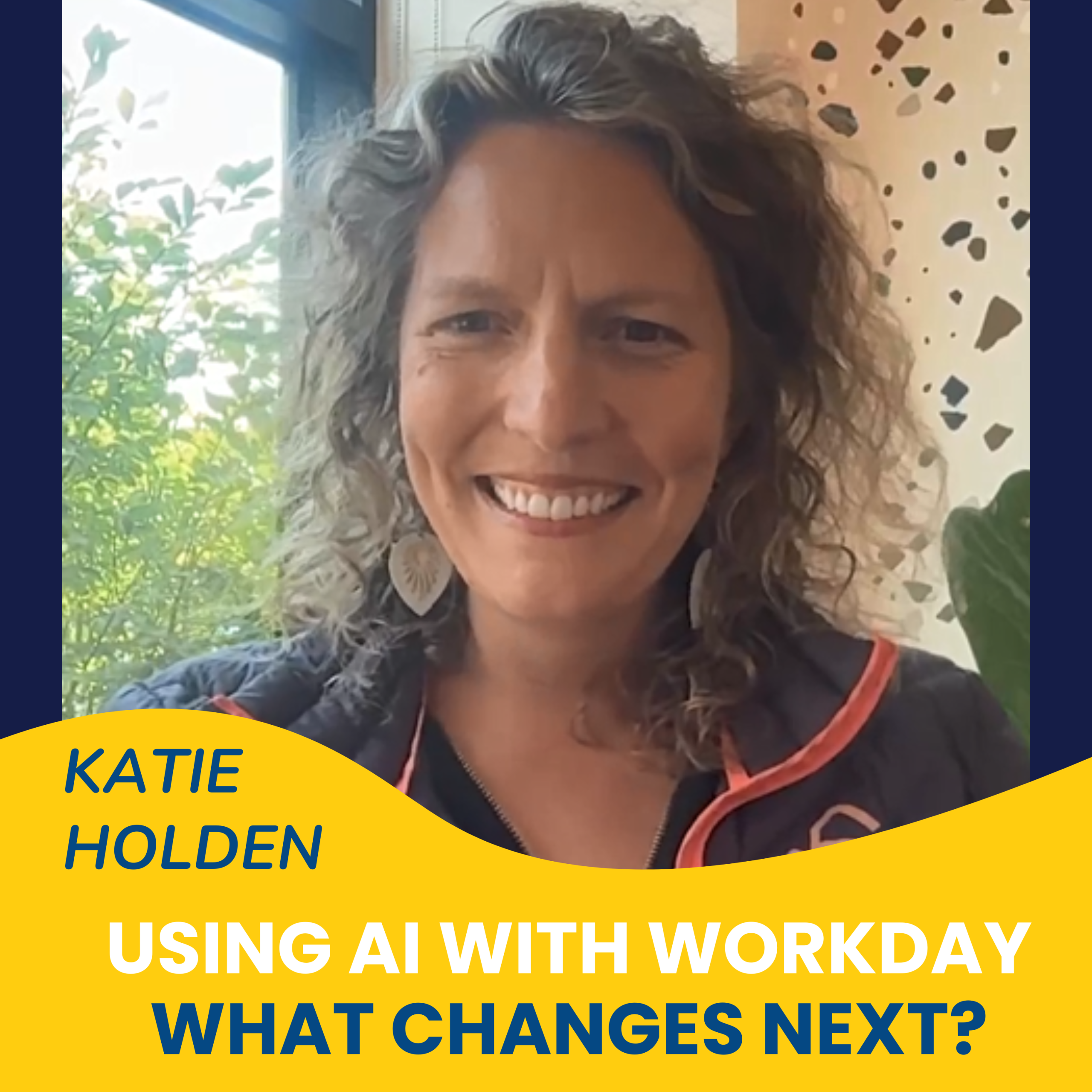
[00:00:38] Speaker B: If AI makes it easier to build in workday, what happens to the people in the businesses that are actually doing the building? Today we're joined by Katie Holden. She spent nearly nine years at Workday, including leading a 300 person organization and working at the intersection of platform strategy and AI. That experience gave her a close up view of how enterprise technology is evolving and where she saw an opportunity to build something new. Today she's a founder of Slidr, an AI powered platform that helps people turn business ideas into workday oriented applications and prototypes. After seeing roughly 1,000 projects created with Slidr, Katie has learned that the biggest opportunity may not be where she originally expected.
We're talking about what she got right, what surprised her, and what happens when the bottleneck moves from building the technology to understanding the problem, getting people aligned and deciding on what actually should be built and what this could mean for workday careers, no matter where you sit in the ecosystem.
So we are so excited today to have Katie Holden with us. She's at Workday nine years and now start her own company, which I always love to see.
So Katie, we're so glad to have you with us today.
[00:01:54] Speaker A: Yeah, thank you so much. I'm thrilled to be here on Wavemakers. I've been a listener.
Nice to be on.
[00:02:01] Speaker C: We're excited to have you.
[00:02:02] Speaker B: I'm just going to start with the obvious. You were at workday and you left to start your own thing. You walk us through that.
[00:02:08] Speaker A: Yeah, I mean, I think it's telling that I was there nine years, right? Like workday is a huge part of my professional chapter. Nearly a decade. You know, I was originally just attracted to what an incredible workplace it is. I think those of us who've had a chance to see Dave or Neil in action, they are just like so authentically interested in building a good company that solves real problems for HR and finance and especially in the tech industry. Which is an industry I work in. It can be a lot of like hype and pomp and circumstance and I just thought it was extremely grounding. And I joined when they're about 7,000 people and I grew with them till about 20,000 by the time I left. So I also just saw about pretty incredible arc in the company's history. I did a bunch of different roles. I worked in product organizations. I actually brought worksheets to market if there's any reporting nerds on the call. Like I spent a lot of time with a reporting crew. I ran the first early adopter program for that product and then I did a bunch of management roles. By the time I left, I'd run, you know, a 300 person platform organization with five different global sites. It's engineering, product management. So not easy to leave. Not easy to leave. I think for me, I'm a technologist by background. I am sort of bit of like a builder at heart. And it's a tough, turvy time out there for AI and builders right now. And I think my last role I did, I sort of stood up the product launch for agent System of Record, which is sort of a new product rolling out nowadays. And I was a product lead for that. And I think my reflection was running large teams versus the trade off of just getting very hands on.
It's hard to do both. And not to say some executives couldn't do both and they could hack all of their nights and weekends and they could run the large group. But I, for me it felt like a trade off. And the builder in my heart was like, I think it's time to go start a company. And so yeah, that's what I did last fall, officially out and started a new company.
[00:03:59] Speaker C: You have that engineering background, right? Like to tinker some good tinkering going on.
[00:04:03] Speaker B: I mean, you've been in other startups too, right? That was in your history. Did that kind of help in making the jump or not?
[00:04:10] Speaker A: I think it definitely did. You know, there's nothing quite like going through a startup gauntlet as an employee, you know, even in the leadership team. Right. This is earlier in my career to kind of realize, whoa, startups just ask you to do anything and there's no one, you're looking around thinking there's someone more qualified than you to do something. And oftentimes there's not. You guys know you own your own business, right? If something is to be done, there's not too many people to turn to to do it. And it doesn't matter if You're a finance expert or excellent at hiring or. You know, I'm not much of a marketer, but I've learned quite a bit at Slider recently. And so I do think the, a little bit of startup life prepared me for stepping into the unknown and knowing that it was going to be okay and that I would figure it out.
[00:04:53] Speaker B: Yeah, that's so true though. I mean, especially when it's really in the infancy or small, you know, and like you said, you want to hand it off and you're like, well, who am I going to hand it to?
So you just have to get it done and stuff. You know, I mean, what did you see where you were like, there's a gap in the market for this. And had you been thinking about this for some time or kind of walk us through that?
[00:05:14] Speaker A: That's a good question.
So, you know, I mentioned that when I was at workday, I owned a lot of our platform organizations and one of the groups I owned was called UI Platform, but it's basically the entire application surface area, that talent and compensation and supplier, you know, all the products sit on top of the platform that my team built. And, you know, I'm interested in AI. Nikki was saying, oh, a lot to tinker with. And so I was thinking about, for me, when you start a company, you're trying to think about what's the fit of maybe a unique insight I have in the world and my skills.
[00:05:47] Speaker C: Right.
[00:05:47] Speaker A: Because that it'll just increase my odds of being successful. I could go, I'd love to make like a pasta making company, but really I just pasta. I don't know anything about making it. So platforms plus AI was kind of my brainstorming petri dish and I landed on the company I'm running now, which is called Slider actually, because I am very excited about platforms like Workday, like Salesforce, like Servicenow, like rippling with AI. And it's a little bit of a nerdy reason, but I think it's pretty easy to follow, which is you have to configure the heck out of these systems to get them to work for your business. Right. If you're the biggest company in the world, you'll spend millions of dollars getting your implementation correct and working for your company. And I think with AI, anyone will be able to be more of like the configurator or the builder against these systems. It's been a lot more like a niche skillset to be able to be trained up and know what's possible and how to use them. And you know, it's really favored a system of deep expertise. And we can talk about this a little bit. I don't think deep expertise is necessarily going away, but I do think, you know, the barriers to entry, to getting good enough and understanding things well enough to like, work on a system of record like Workday. Those barriers are dropping dramatically, especially with AI. Yeah, Slider for me, you know, or an AI coding agent product. But we're built on Workday's platform called Workday Extended. I think that category is going to grow a ton in the next three to five years because AI is making it possible for people to do custom at really low cost. So it's just new.
[00:07:20] Speaker B: And yes, we're definitely going to go down the skill set and what the future looks like. Yeah.
[00:07:26] Speaker C: And Katie, I was going to say, did I see that? You're just past a thousand projects. I don't know if that is even more now, but the Slider. Congratulations. Been a year leaving Ish, but over a thousand projects. Holy cow. That's amazing.
[00:07:40] Speaker B: Awesome.
[00:07:40] Speaker A: We love it. And it's. It just feels so good because I've worked so hard to get all of these customers and builders to even know we exist. And so when you reach a milestone like that. Yeah, you just feel really proud. And hopefully everyone who has touched our product before, they can feel some proud too. They're part of the first 1000, which is fun.
[00:07:57] Speaker B: All right, so let's get into it. I purchased a subscription. What happens? What am I doing?
[00:08:01] Speaker A: Yeah, so I mean, really, Slidr is for non technical types, right? I know we call it an AI coding agent, but we have people in the HR team using Slidr, we have people in the finance team using Slidr, and we have people who build extend apps. And really all you do is you just tell it some business problems you're having and Slidr will design and code the entire application for you just. Just by chatting with it. So it's almost like we've put a little workday designer and a workday extend developer and we've built a coding agent for that. So that's really neat on the left. You're just like, let's make up a common extend use case. Like let's say a company has a corporate parking lot, but it's a secure parking lot.
[00:08:43] Speaker C: Right.
[00:08:43] Speaker A: Maybe it's a military facility or pharmaceutical or something. So you want people to register their car before you know they do that. Well, you want it in workday. Cause then it's on their employee profile and then you want the Meter made to be able to walk, you know, go around the parking lot and validate the cars are allowed there. Right. So this is a pretty common extend use case. Doesn't exist natively in Workday's product line. Workday product management will never prioritize a parking lot feature. So it's perfect, right? You can use Slider and just say, build me a page where an employee can enter their car details in Workday. And my app will do that. It'll build the page, it'll design it using only components that actually, you know, exist in Workday system. It'll generate all the mock data and business objects for you. And what's really cool, though, is you can just iterate with it, just like talking to a normal person. So it's just an incredibly accessible way to design and build Workday experiences where instead of needing to get sort of credentialed as much on the expertise of Workday's platform and Workday extend, anyone can do it. Now if you're at Deloitte or Accenture or Kanos or, you know, pick your favorite, those are the big names. There's so many brilliant boutique firms that are customers of Slider, they can actually just talk with their clients and build solutions. So that's what I mean about AI dramatically reducing the cost to get these custom solutions created. It's a new opportunity. It didn't exist even 12 months ago.
[00:10:09] Speaker B: I love that. I think I saw that you said someone had said, what is the replay, The Workday?
[00:10:14] Speaker A: Yes, yes.
[00:10:15] Speaker B: Is that what I'm. In my mind, I'm thinking, Bolt, I'm used Bolt.
[00:10:18] Speaker A: Yes.
[00:10:18] Speaker B: You know, or lovable or things like that. And then, you know, or, I mean, even, you know, Claude. I mean, any of them. But so what makes this different than those, then?
[00:10:27] Speaker A: Yeah, it's a great question. We actually use Claude. Claude code. And Opus is the foundation of our coding agent. But, you know, if you think about it, and I hear this all the time from clients, everybody's playing with these, right? And they think they're so creative. They're like, oh, Claude, create me an app that lets me, like, totally reboot my performance process.
360 reviews, you know, oh, just my dream. And Claude's like, yes, ma'. Am.
And he'll. He'll design and build a completely custom application, which is great. But then you take that to the Workday team and they're like, none of this is. This doesn't make sense. I have to redesign the entire thing to actually make it work for Workday. With the actual components. And there are constraints in these big systems, right? Whether it's CircNav, Salesforce, any of them, you can have certain things on a page and then there's a business process. And the business process has rules and constraints. And so all of these other design tools, coding agents, any of them, they just don't know anything about workday. Slider actually builds for workday. What you build in Slider is implementable. And not only is it implementable, we've done the first part of the implementation for you.
[00:11:34] Speaker C: Right.
[00:11:34] Speaker A: We sort of kick started the implementation process. Our app produces code that you can cut and paste into a workday tenant. So it's a, it's maybe sort of a technical detail that not everyone would be as interested in, but it's the kind of thing where we're just much closer to the heart of the enterprise system of record. And the guardrails that, you know, it actually runs on.
[00:11:54] Speaker B: Explain the guardrails, because, I mean, I know guardrails conceptually, but using Slider and you talk about the guardrails around it, I mean, explain what that is.
[00:12:03] Speaker A: Yes. So it's things like, and it's, you know, it's death by a thousand cuts, as it always is with these enterprise systems. All the things you didn't know until you tried them. And then you're like, that didn't work.
Like, now there's a page called a hub where you can have multiple links and you can kind of expand and collapse them. Well, you probably didn't know this, but a great example of a guardrail is those pages can only be view pages, not edit pages, you know, and our system will just do that naturally. It knows that it'll implement it, it'll give you design best practice for it. So that's just one kind of minor example, but there are literally hundreds. Right. Like the way that Slider is built is by consuming the public documentation and getting it all structured in a way that an agent can actually make use of it, you know, for the human.
[00:12:50] Speaker C: And I was going to ask Katie, you know, everybody uses that phrase, you don't know what you don't know. But as you were literally building Slider, how are you constantly adjusting and pivoting and listening to your clients to continue to make the school even better?
[00:13:06] Speaker A: Yeah, that's so spot on, Nikki. Right. Like you have a thesis, you go out and then you start giving it to people and it's like it's totally not working in the beginning. Right? So like in the beginning of Slider we just only had work days. They have a design system called Canvas and our coding agent used their Canvas design system to create experiences. And we thought the core use case might be more like core HR or all the core workday experiences because of course those are so common. But I'll tell you, we'd put it in everybody's hands and they were like, this doesn't know anything about my tenant security. This doesn't know anything about my data model. And we're like, right, but you don't want to give our startup AI access to your security. You know, like, there's a wall here for a reason.
[00:13:46] Speaker C: Right.
[00:13:47] Speaker A: And so then it was a lot of just like, well, how are you actually doing things today? And actually this gets into a little bit to how I think skills and roles will change. And Slider is just an example tool. But like, if you talk to people about how they're designing and building a lot of workday experiences today, they're doing this elaborate upfront design process that lasts many months and stakeholders can never all get in the room. And you know, and then at phase two of the implementation, some stakeholder comes in and says, that's not at all, I thought it was going to look like. And now you.
Nine months.
[00:14:17] Speaker C: Yes.
[00:14:17] Speaker A: You know, it's backwards. As the client sees something at X months in, and now that they're seeing something, they're finally able to articulate their requirement. They're like, I didn't know it was going to be like this. It needs to be like this. Or they're like, oops, I forgot about a third party system we have in Belgium. You know, and so scope it, you know, and nobody's happy with this process because it bloats and adds surprises. And I think firms have done a nice job creating, you know, best practices and recipes and setting expectations to try and take people on this ambiguous journey. But you know, you should just do way more of that work up front. Design, build, innovate, figure it out, lock it down, do it in a week, get everybody in a room for a week. That's literally what folks use Slider for. Collaborative design session all the sign offs. But it's only possible because AI is assisting, you know, the builder through all of this in seconds instead of days. Like, you know, we hear quotes like, you can build a whole page application and slider in 20 minutes. It will take you 20 hours to build it all out in a tenant. The way things work today, where engineering is this exciting, expensive, scarce resource, is changing with AI coding agents. I'M still very bullish on engineering as a critical skill set. And I don't buy into the narrative at all of all these jobs collapsing. But the bottleneck is changing. Where work happens, changes. And, you know, as engineering becomes faster, the engineers go up the level of abstraction to more systems thinkers. Right. How does the system work overall? And the new bottleneck is actually just aligning people on the requirement and the design, which is what I'm designing. Slider, like, that's new bottleneck. That's also a new business opportunity.
[00:15:59] Speaker B: Wow, that makes so much sense. I think about all the projects that I've been on and that whole to be part. When you're designing out what it's going to look and you're right, people do get so overloaded and they check out, they'll nod their head, but they're not really, you know. And then after you go live, people are like, that's not what I wanted or I didn't understand. So when it creates a prototype, what happens after that? Does it have code and then you're giving the code to the developers or.
[00:16:24] Speaker A: Yeah. So there's kind of like three ways you can use Slider. So you can use it in the sales cycle where it's like less about being accurate and more just like you're hearing problems from clients. And you can generate three or four ideas, different solutions, and really show them.
Like, we hear your problem.
Workday is a vendor that can meet this solution and here's some options. Then there's the design part. That's what I meant more about, like, everyone gets around the table for a week and you really go through like the meat and potatoes. Like, no, really, we have to decide who the workflow approver is. Let's say it's a employee use case. There's a huge trade off to make of if it goes to the manager or the HR business partner. Again, seeing is so helpful here because if you see an HR business partner's real workday inbox, it's full of hundreds of items.
Hopefully there's not a critical employee approval that you're adding to that.
Right. So this is, you know, the facilitation of the end to end design is sort of the same second way that people use Slider. And again from months to like weeks, it's just amazing. A week. And everyone actually knows because you're signing off before anyone has done implementation work in the tenant. And then the. What you were asking about, Carla, is really that third and last use case, which is okay, now that we've got the whole app spec down and signed off. It's time to build now that is where Slider starts to stop. Because when it comes to automating, building within a tenant, workday should solve that problem. Me as a startup on the outside will not be well suited to solve it. I just won't have access to the APIs and the context. And so that's kind of where we hand off. But the cool part is REI has created like an incredible context package. Every decision documented, visualized the entire history of the requirements. And you can pass that to the workday agent then next. Right. And to the team building. So that's kind of at the vision level. I think Workday is putting out a lot of great agents. I got a configuration agent out recently. The workday developer agent was recently announced at devcon. So people love using Slider. It's so fun to use. That's why we call it Slider. Is it? It's phenomenal to share your requirements and to watch someone else do the work to help them create them for you. You know, it really is great.
[00:18:34] Speaker B: Creating is fun and creating easily is. I mean that's why everybody loves it. So curious. Just share some of the out of the thousand projects. Give us some unique things that people are doing with it. Yeah.
[00:18:45] Speaker A: How long do you have? No, this week. Yeah.
[00:18:47] Speaker C: Right. That'd be five episodes, which would be fun.
[00:18:49] Speaker B: I'm curious. And yes, you could feel the energy from Devcon, my LinkedIn feed all through Devcon was just absolutely crazy. But now everybody can build what they always wanted that, you know, these applications never had.
[00:19:01] Speaker A: Yeah. I would say like, you know, a huge amount around getting talent processes. Right. Think it's one of those things that really touches every people, manager, every employee. It's so personal. So I'd say we have a ton of kind of talent. Ton of 360 feedback. Just that's been a popular feature request. Well, that one's been on Community for a while. But you know, why wait if you can build?
[00:19:24] Speaker B: Exactly.
[00:19:25] Speaker A: If cost of building gets cheaper, the equation changes for how much you want to wait on roadmaps. So yeah, it's really all over the map. But I will say the kind of talent I think comes out as a theme because that is something where HR leadership, they do just get a lot of flack about workday that one cycle. But of course the talent side, one time where the whole company touches it and all of a sudden everyone's become a workday expert and they've got feedback on it and that that can be hard when you're the HR leader. I know it is. I've talked to them in public forums and private forums. And so I think that might be part of the reason why folks are gravitating towards that with tools like Slider is, you know, if you're going to kind of be in the arena with your stakeholders, at least having a little more autonomy to have the solution, you really can stand behind. Feels good.
[00:20:07] Speaker B: I like that.
[00:20:08] Speaker C: But you also hit on something, Katie, with the talent piece. Right. So what can workday professionals, now that you know, they see it, they see what's going on, and sometimes we have those conversations. Will my career be impacted or what can I do because of AI changing so quickly and impacting my role? Is there something that you can share that maybe workday professionals, what could they do now that could maybe enhance their own career and take them to kind of where things are heading, in your opinion?
[00:20:40] Speaker A: Yeah, this is such a great question, Nikki. I'm going to answer it at two altitudes because I think they're different. Right. So the first one is maybe I'll share how I think roles are going from lots of specialization to more systems. So I'll answer that in the workday context. Okay. At a roles level. And if you look at technology history over time, we kind of are moving up what we call the ladder of abstraction, where every time you get these new tools, you no longer have to be good at using an abacus. Now you can punch the number three in the calculator, get Excel, and now you can use the sum formula, so you no longer have to punch the thing, you know, so. And really, AI is just a newer version of this now. It's a very weird version because it feels like you're talking with an intelligent thing on the other end. But you know, what I believe is that because AI can consume so much context, it can read all of workday community, it's already been trained on all of the public Internet. The details of those things will matter less. In the same way, we no longer have to know the internals of the C compiler language and developers write in JavaScript now. Right. You move up the ladder of abstraction. And so I think roles, specialization, and depth of experience matter because you need to have good judgment, so you need to have the reps to kind of understand what good decision making looks like for your domain. But the exact details matter less because you can ask an AI to go investigate something and present back to you. Right. I think there'll be kind of two bigger Roles of the future.
One is more of the functional expert who can frankly understand a lot more because they'll have AI working with them, whether that's across regulatory and technology and their company's needs. They'll be able to consume a lot more information because the AI will be prepping it for them. So it's a systems thinking, but still quite functional. Like you don't want to just have someone who doesn't know anything about payroll in the middle of payroll decision making. That's why the depth still matters. But it's more systems thinking, less of I'm a payroll administrator and more of what's the system of payroll and how is that changing and what are the capabilities and what are the things I can design? And then technical. And a similar. More of a systems architect versus a specialist in various technologies. Right. And so like at a skill set level is to try and take on those projects and encourage the systems thinking because that's what AI will let you do. It will let you direct a lot more expertise on your behalf towards the outcomes that you're trying to achieve. And so being able to kind of understand the system and then, you know, direct something to help you achieve those outcomes. I think there will still be different roles, but more systems thinking. Maybe I'll put just pause there before I say kind of like three ideas that I have that people could do right now or how does it resonate with what you're hearing?
[00:23:29] Speaker B: You know, it's funny, people are asking us, well, you have this whole techno functional thing that we've been talking about for forever. There's this on this end and people, you know, in the past, if you think about erp, old erp, it was, oh, I do integrations and I'm also functional. And it was like, well, is that really. And you haven't seen that as much in the ecosystem, but you're starting to. Then you've also got these requirements. I just had one come in today, a referral that they want an administrator, which means I want them to do integrations, FINS and acm. And it's like, is that really there yet?
[00:24:03] Speaker C: No.
[00:24:03] Speaker B: Yeah, you know, so I mean, so those are the things that we're getting questions on all the time.
[00:24:08] Speaker C: Well, and what you were saying, Katie, is someone who can also be strategic and see long term, kind of be a visionary. Right. Be able to have those conversations and understand what the business goals are. But then how. Then that translates into systems. But then I'm assuming with your top three, somebody needs to be able to, you Know, really understand the architecture, the ins and outs of what's going to work. How is this going to help everybody, you know, and, and so there's a lot of decisions being made that you can't just feed into. No offense Slider, but you can't just feed into. I mean, you gotta have conversations. You still need to see each other and talk to each other and plan. And that's where those critical thinking is gonna still have to be part of it.
[00:24:55] Speaker B: Right? I wanna hear what the three things, advice that you would give people in the ecosystem. Right?
[00:25:00] Speaker A: Yeah. So I think it is all about getting hands on, Right. I think you frame it nicely. Nikki, you're like, don't wait for someone to tell you, here's your AI project, go do something. Right? So number one, we're in release season of workday, right? Biannual releases, it's happening right now. And I've seen a lot of people playing with AIs, like summarize all the release notes or you know, copy paste and. But I would just say no, make it a business impacting thing that you do with AI right now. So what I would say is take any old feature you're excited about. Don't worry too much about if your company would actually implement it or not, or never. Just take something you're genuinely interested in. Do copy and paste all the now open community content or anything you can find about it into an AI and then talk about your business. Now obviously you do need an approved AI for this. Please don't talk to your business about chat. Chat. GPT is not approved. But you know, and just talk, just explain Lane your function. My recruiters are really struggling with, you know, get specific, talk about your industry.
Don't just have AIs like summarize a feature for you or create an AI slot brief that you send in an email. Nobody wants to read AI writing stuff. I'm sorry, we're so past that right now.
[00:26:08] Speaker B: Exactly.
[00:26:10] Speaker A: Come to a real sharp opinion that you have driven with AI.
Should you use this feature or not? And be really crisp, like I absolutely think we should do this and that I do not think we should do that. And AI is a wonderful thought partner, but the key is that it's not about you just like having to do some work and then like it'll come up with a magical answer. Of course it won't. Like your context and judgment about what is realistic in your organization. What are the true constraints of your industry, how far or fast you can push things is so human. It's very valuable. And now you've got a real thing you can talk about at a team meeting. Right. Or you could really advocate for something. The second one is in a lower tenant. Yes. Go play with one of workday's AI agents. Maybe double check licensing. I think they're all free for a certain period of time.
[00:26:59] Speaker B: Yeah, but you know, at least they extended it.
[00:27:02] Speaker A: Yeah, free for a little bit longer. And here's the thing, don't set a goal that's unrealistic that you can't achieve and you feel bad like I'm going to launch it production in a quarter because there's a lot of things that are not always in your control, but just really put it through the reps, you know. And so I think just getting really hands on, it's like, it's kind of why I was saying I like people whose free trial Slider. You just have to get hands on with these things to know if the agent is suitable for your company. And that one is, again, it's kind of free, so why not use it? It's a license.
And then the last one is the shameless plug. If you have a business problem, why not try building it in Slider? You don't even have to have an extend license to use Slider. What it does is Slider teaches you design thinking. You can create pages, you can work with stakeholders, you can send stakeholders prototype links. If you're trying to build a business case for whether or not you should build a capability, Slider is great for building a business case. You can build a Slider and not share it with anyone just because you're curious and you're wondering if you want to get a little more technical. So I just think it's good fun with AI in low barrier ways. You could go and do any one of those three this afternoon, as long as at least in the first one, have access to an AI that's, you know, approved by a company and it'll be real learnings, not like a AI class or something, which at least for me is usually how I learn better.
[00:28:18] Speaker B: No, I love that. I mean, none of those are really major. I mean like heavy lifts. Right. It's just to kind of start putting a step forward. All right, so I mean, because everything I'm hearing, I'm thinking about leadership in companies. I work day leadership. You're basically telling me, okay, I've got something that is going to help me reduce my development. Not development time, but reduce time to take something, a solution, bring a solution and I can create Something visually which always helps from a user adoption or even to get the budget that you need. And potentially this is going to impact staffing, which I wanted to talk to you about that so I can save money, I can move faster and I'm going to get more agreement. I mean, is it really that easy? I mean, I'm not trying to, but is it?
[00:29:04] Speaker A: I mean, I think just to play devil's advocate against my own business, because it's the healthy thing to do as a founder. I think Nikki said something earlier which is true, which is the hard parts are still hard. You know, everything you just said is true, Carla, which is obviously why I'm excited about Slider. And you know, I'm out here on podcast talking about it. But it is still a challenge to get a set of funding across the finish line. It is still a challenge if you have a challenging relationship with it and they're going to make your life tough to get any real work done. It is still a challenge to get budget for projects that can be perceived to be less strategic than revenue. You know, something aligned to your core business. And so I think there's nothing but upside of using Slider, but it doesn't change the fact that like Slider unfortunately doesn't change the laws of physics. That's future roadmap. But you know, if I could make the human parts easier, I think the human parts are still the challenging part.
And.
But in the meantime, it's a bit of, you know, I like it because it's a real use case of AI that you can actually adopt now. You know, it's not some future thing. It's available now, right?
[00:30:13] Speaker B: Well, no, I mean my thought process really comes from. I mean I came up through the cowling rings and the easiest way to get something approved is to present it with a cost reduction. And that is all I'm hearing through this whole thing. But along those lines then organizational charts going to change.
[00:30:29] Speaker A: Yeah. Oh gosh. A lot of different ways. We could take this one, I think maybe. You know, I personally don't believe that AI will come and sort of mass destroy jobs. Now I know I'm probably come off of it as the AI optimist try, but I have some thesis for why. So let me tell you that I think it comes down to sort of supply and demand of the work. Right. So let's use AI in the use case where it's the best in the world right now, which is writing engineering code. Right. If you look at some of the recent surveys, 46% of pull requests, which is the name of a code submission now is from an AI. If you hear from companies like Anthropic at the bleeding edge of this, they'll tell you a hundred percent of their code internally is written by AI. And that sounds like Anthropic's about ready to fire a hundred percent of their engineers then, right? Like why do you need all these people? And of course that's not true. And that's not true for a lot of companies adopting AI. And it's because the demand, meaning the amount of work that a company wants to do that is software related, has always far exceeded the amount of capacity they've had. And so when you make a worker way more efficient, it's not like you have to cost reduce because if there's tons of other work that you genuinely wanted them to get, but we're never capable of, for various laws of physics reasons, it works. And so I think this, you know, that's maybe how I'd frame the efficiency or kind of cost cutting question is my understanding. And at least for the vast majority of workday teams I've talked to, they are pretty primly resourced. What's the right adjective here? They're tight, they're lean.
[00:32:07] Speaker C: Lean.
[00:32:07] Speaker A: They're lean teeth.
So I don't want to, I don't want to say that I don't think AI will have no impacts. But, but I personally believe that if there truly is just a big backlog of things that everyone needs to do, the efficiency gains do not have to mean that. Now in certain roles I do think, you know, kind of services and hourly based roles, of course it's an existential backdrop because if you're more of an hourly based role and now you're able to do something 80% faster, you know, you'll need to generate that much more new business. And that is a challenge. I speak about that openly with, you know, in rooms of people I talk to now a slider. But again, if there's lots of work, it works out. If it doesn't, my honest career advice to people that I care about in this ecosystem too is long term, nothing's happening immediately, right. Like upskill yourself. And long term I might be considering more in house type of positions, right. Where you would be a little less, a bit more immune to some of those macro factors that are totally out of your control or go up the level of abstraction. Right. Do the skill sets where you get to be that more of that systems role and thinker because that also broadens the type of work you can work on so that if work becomes, you know, different things, get AI assisted more sooner you're playing more of that architect role or that kind of functional business leader overseeing role. And so those would be concretely two things I'd be thinking about in folks
[00:33:28] Speaker B: issues that makes sense. I mean when all the AI hype out there and you know it's going to cut all these jobs and things like that. I think I saw something the last week or so that even Josh Persian put out saying that that's not happening, that they're not seeing the reduction and yes, did we have all these layoffs and things like that? But that was really over hiring, you know, from the pandemic in that time period and stuff. So everybody immediately went to oh, it's AI that's causing that. But they're really coming out with a lot of reports now saying that's not the case. But it does shift like you said. So that's good. Do you think more people will move? Maybe if they normally relied on third parties, they're going to have the ability to bring in house or ooh, this
[00:34:06] Speaker A: one I've had a lot of debates over. I've had debates over tea, I've had debates over beer. Because you know, Slider, we work with both, right? We have HR tech teams who use us, we have consulting firms or the current bigger customer size that we have because there's so many of them, of course.
And also they just do a lot of custom development work so they get the reps in and that benefits from a tool like Slider. You know, you ask yourself why do you outsource work in the first place place. And usually it's because having the capex on your table as a full time doesn't make sense. And so, you know, a services based approach lets you sort of flexibly grow and shrink your needs without having people on your budget full time. And then also skills and expertise, right? And same problem though. I need the skill, but I don't need full time. So one more hot take I have that maybe you just wouldn't hear from other people who are, you know, more economists and knowledgeable than me on this is taking the time to write down and make the work in a nice little package that can be externalized. That takes time for the internal team. And what's sort of interesting is that by the time you go through that process, the work is also pretty well scoped to have an AI help you with it, which is the ability to kind of increase your Capacity where internal trains are driving more throughput and productivity might lend in favor of in house resources on some time horizon. Right. I think there'll always be external firms too though. And nothing happens as fast as anyone says it does. It kind of happens slow in the beginning and then fast by a decade from now. So plenty of years here in the middle to, you know, continue your skillset and whatnot. But it's a. Yeah, if I had to be like a betting person, maybe I'm 60% more betting on the rise of internal folks and expertise who can really drive these tools effectively versus as much hiring of external firms for those reasons I just shared.
[00:35:55] Speaker B: That makes sense. And I mean, I've actually been thinking about this lately even same with independent contractors. And honestly, it's anybody we've defined ourselves as. I'm a benefits expert, I'm a this, I'm a whatever. And you know, clients now more and more are having a little smidgen of a need maybe in an area.
But as one client said, I mean, yes, you can have an AMS group, but if they really want to go with independence, it's like I can't have 12 independents, you know, in here either. And so one option obviously is to get wider, you know, from a technology perspective or to start adding things to your offering that then makes sense for you to get more hours or the client needs you more or help them out more. And it doesn't have to be necessarily going wide. You know, as we think about it, that shift that you're kind of talking about. Yep.
[00:36:48] Speaker C: Well, and as you're, you know, with Slider, you mentioned there's so many different people that can use the tool. And being an entrepreneur or independent consultant or contractor, they can use Slider. And that could be another resource for them to share with their clients and differentiate themselves, you know, maybe to other contractors that are out there.
[00:37:12] Speaker B: Katie's loving it. You're saying this.
[00:37:14] Speaker C: Well, I have a question about entrepreneurship and I mean, who else to not throw that question out to because you know, there's so many amazing, wonderful folks that are using AI. They have all these ideas, maybe want to go independent. Right. And they're a little fearful to, oh my goodness, how am I going to jump ship? You did it and you did it. Well, my question is what advice would you have to those that want to go independent? Maybe start, start their own company, have their own product or tool. What can they do? What did you learn from that? Move yourself.
[00:37:50] Speaker A: Yes. I mean, one advice I have is if you can sell to people that are actually people you care about and your friends. What a gift. You know, when I left Workday, I could have started a more generic platform AI company. And I started with Workday for a reason, which is I already have a little bit of a network there. So getting faster feedback is so important. In the early days of zero to one product development, it helps to have people you can just call up and help you. You know, I think you have to decide a bit what kind of company you want to be. We are more of a product and technology company with a little bit of services, and a lot of folks are services. And then you. So that's your product. You're either your product is your own knowledge, your time, your capability, or in my case, you know, a website effectively that you can use. And then the second thing is, well, how do you get people to know that you exist?
It's so tempting to be like, I'm just going to build the coolest thing and then people will use it. You got to get the word out. And that has been part of my founder journey, is getting comfortable being louder on social media about Slider. I'm not a natural salesperson. Sales is a different thing that I'm learning. And so maybe my advice for that would be, you know, at least make sure that you're ready to plan, play that role, or you have someone who's ready to play that role with you and for you because, you know, people will not come and find you. And maybe you're so lucky to be a Carla Nikki combo dream team where you guys can divide and conquer. And I've got a small team, too, that I get to divide and conquer with. But those are really the two fundamentals of starting a new business is like, what are you building and selling and who's doing the building and who's doing the selling, and you have to do both, and they have to happen at once. So I think it's a great time to build, though. You know, it's the tooling available now because of the AI kind of boom.
There are just so many tools to help you as a small team now. And so I think it's quite a bit more possible to start a company because there's a lot of tools that you can buy that can help you.
[00:39:48] Speaker B: Absolutely. They're calling it. I mean, they're saying it's a big equalizer for small businesses, period. Okay, so barrel Rose, this is.
You're in out of the wave really quickly. So I think I'm starting one AI claim that you wish people would stop repeating.
[00:40:06] Speaker A: I wish they would stop just pretending. It's going to solve all problems. There's so many problems that are human that have nothing to do with technology.
It's human.
[00:40:14] Speaker B: Yeah, I see it. That's good. All right, I think I'll get the next one. Knowing what you know now, what would you have told yourself before you left workday?
[00:40:22] Speaker A: This one's hard on the spot, I think.
[00:40:24] Speaker B: Did you even hesitate or were you like, I've got the idea, I'm taking off.
[00:40:27] Speaker A: I thought about it, you know, I thought about it over six months because I was in a really good position. I have two young kids at home. I had a lot of sponsorship there. So it was something I thought about deeply. But I think maybe knowing what I know now.
[00:40:43] Speaker C: Well, I don't know.
[00:40:43] Speaker A: I kept all my relationships. I thought about it so much. I'm not sure I have a quick one on that one because. Because it was a very thoughtful decision.
[00:40:49] Speaker B: No, that's good. And relationships are so key.
I think about some still people that I'm super close with were from my time at Grant Norton, which was years ago.
[00:41:00] Speaker C: All right, I got the last two, so. All right, here we go. So the person who wins this workday market is the person who.
[00:41:10] Speaker A: Oh. Is the person who thinks very creatively and tries a lot of things. I think there's so much changing right now. It's not really time to pretend like you have all the answers. It's a much better time to be nimble and to retest each of those assumptions and quickly. And that compounds.
[00:41:25] Speaker B: Absolutely. And we have the three things that they can start out with.
[00:41:28] Speaker C: I have the final question here, Katie, and it's my fave. I'm just gonna say, so what is your favorite, you know, pump up song, Motivational song, when you need a little extra. Umph.
[00:41:38] Speaker A: Umph, my gosh. I kind of think of it as, like, what's your walk on music when you're, like, gonna go.
[00:41:42] Speaker C: Yeah, yeah, your walkout song. Exactly.
[00:41:45] Speaker A: One of my all time favorites is I love Amy Winehouse. Kind of rich, kind of gritty voice. But her song Valerie is. Yeah, it'd be like a Friday night cooking song. And like, put it on, let's go. Love it.
[00:41:59] Speaker C: That's a great one. Oh, she had so much talent.
[00:42:02] Speaker B: She had grit, too. I like it. Yeah, that's perfect. Well, you made it through. You made it through.
So. Knew you would. Well, Katie, we're so glad to add you on the podcast and thank you for sharing all that you're doing. Congratulations. I think it's fantastic.
[00:42:19] Speaker A: Yeah. Thank you so much for having me, too, and getting to meet some of the wave makers. I'm just grateful.
[00:42:25] Speaker C: It was wonderful.
[00:42:26] Speaker A: And yeah, this was a great conversation. So thank you for having me.
[00:42:29] Speaker B: Before we sign off, obviously we're going to have links to you and Slider and everything all in, everywhere we are. But if someone wants to reach out, what's kind of the best way to reach out to you?
[00:42:41] Speaker A: Thank you for asking that. Yeah. Our website is slider.dev my email is katieslider.dev and because we're small, I'm really hungry to talk to anyone. So it's completely okay to reach out to me directly if you have questions, if you're curious. You don't have to want to use our product or pay for it. Just be a feedback or you're interested. I'd love to hear from you.
[00:42:58] Speaker D: Katie, thank you so much for joining us. We covered a lot, but I think one of the biggest takeaways from this conversation is that making something faster doesn't necessarily make the hard parts disappear. It may just move where the hard parts are. If building gets easier, understanding the problem, getting people aligned, and knowing what should actually be built becomes even more important. And that also means bringing more judgment into how teams are built, what gets outsourced, and potentially what a workday career looks like. From here, you can learn more about Katie and see what she's building with
[email protected] and if this conversation made you rethink, think what AI can mean for your own workday career or team. That's exactly why we have these conversations on wavemakers.